LED Dog Collars: What Actually Works on an Unlit New Zealand Street
Reflective Collars Do Not Work Until It Is Already Too Late
Here is the problem with a reflective collar. It has no light of its own. It only becomes visible once a car's headlights are already pointed directly at your dog. On a straight, well-lit street that is usually fine. On a bend, in rain, or on a road with no streetlights, the headlights arrive at the same moment the driver does.
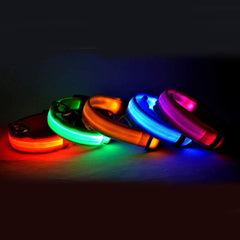
A light-up collar solves a different problem. It is visible from the side, from behind, and from a distance, before anyone's headlights are aimed anywhere near you. That is the whole argument, and it is worth understanding before you spend anything.
When a reflective collar is enough
If you walk on lit footpaths in a suburb, in daylight, or your dog is always on a short lead beside you, reflective is fine. You do not need to over-buy. Most dogs in most of New Zealand are walked in conditions where a driver has plenty of warning.
When you need a light
Three situations change the maths.
Winter mornings and evenings. Between May and August, a 7am or 6pm walk in most of the country is done in the dark. That is not an occasional edge case, it is half the year.
Rural and semi-rural roads. No footpath, no streetlights, cars moving at open-road speed. A driver's reaction distance at 80km/h is longer than the range at which a reflective strip lights up.
Off-lead in a reserve or on a beach. Your dog is thirty metres away in low light and you need to know where they are. A glowing collar is as much for you as it is for drivers.
Battery or Rechargeable
Both work. The choice is about how often you walk after dark.
Battery collars cost less up front. The cell is replaceable, which means if it dies mid-walk you can swap it rather than wait for a charge. The downside is that you are buying cells forever, and they always die on the walk where you did not bring a spare.
Rechargeable collars cost more to buy and less to run. If you are walking in the dark most nights through winter, rechargeable is cheaper within a season. Plug it in while you eat dinner and it is ready for the morning.
The honest rule: if you walk after dark more than three times a week, buy rechargeable. Otherwise battery is fine and cheaper.
Getting the Size Right
This matters more than the light does, because a collar that comes off is worse than no collar.
Take a soft tape measure and run it around the base of your dog's neck, where the collar naturally sits. Keep it snug but not tight. Then add roughly two fingers' width. When the collar is on, you should be able to slip two fingers underneath comfortably. Any looser and a dog that backs up hard can pull straight out of it.
Two things people get wrong:
Measuring over a winter coat. A thick coat can hide two centimetres of slack. Re-check the fit after a clip.
Assuming size by breed. Neck circumference varies enormously within a breed. Measure the dog in front of you, not the breed average.
Can You Use One in the Rain
Light-up collars handle rain and wet grass on a normal walk. They are not built to be submerged. If your dog swims, at a beach or a river, take the collar off first. Water getting into the battery housing is the single most common way these fail, and it is entirely avoidable.
What to Buy
If you walk in the dark occasionally, a battery LED collar in the right size is enough, and you are spending under thirty dollars.
If you walk in the dark routinely, get a rechargeable collar and pair it with a lead you can see with. A retractable lead with a built-in spotlight solves the other half of the problem, which is seeing the ground in front of you while your dog ranges ahead.
Browse the full range in Dog Collars & Leads. Everything ships tracked across New Zealand with 30-day change-of-mind returns, so if the size is wrong you can send it back.